
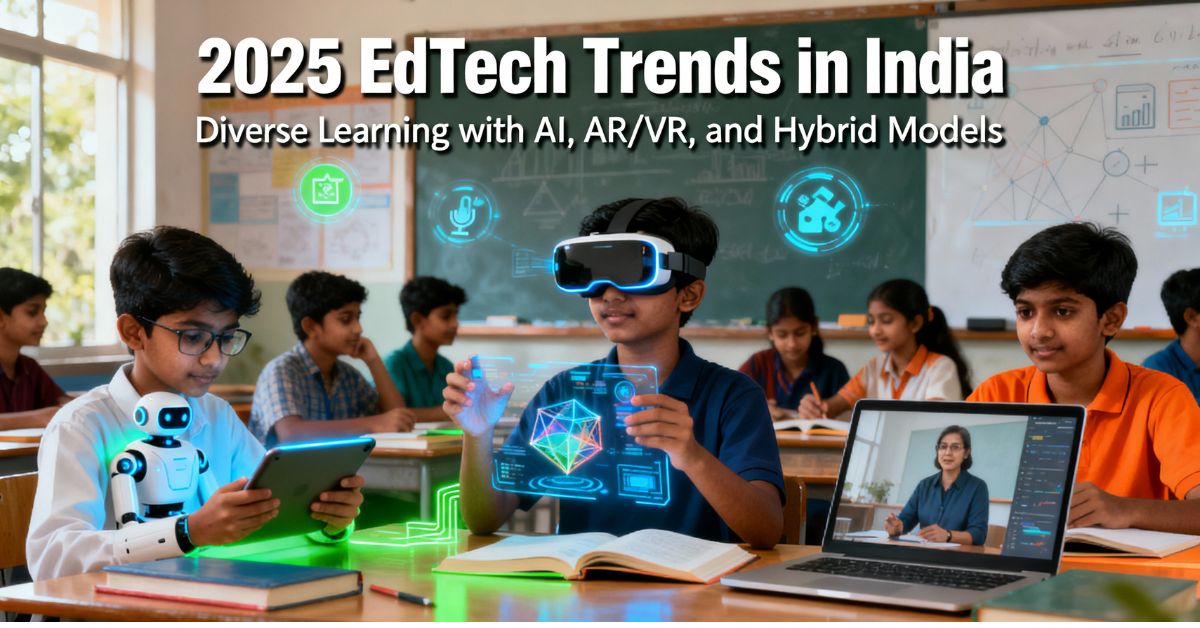
Education in India is evolving rapidly as technology reshapes how students learn and
educators teach. In 2025, several EdTech trends are set to transform classrooms,
digital learning platforms, and the overall education ecosystem.
From AI-driven personalization to immersive AR/VR experiences, these innovations
are redefining education, making it more accessible, inclusive, and skill-focused.
1. AI-Powered Personalized Learning
Artificial Intelligence (AI) is enabling personalized learning experiences. By analyzing
student data, AI platforms can recommend tailored content, adapt assessments, and
guide learning pathways.
This personalization improves engagement and helps students focus on areas where
they need the most support.
Similarly, platforms like Edasssit's AI Job Recommender use AI to personalize career suggestions for job seekers,
ensuring the right talent connects with the right opportunities.
2. Hybrid and Blended Learning Models
Hybrid learning, which combines online and offline education, is becoming
mainstream. It allows flexibility for learners to access digital content while still
benefiting from classroom interaction.
This approach accommodates diverse learning styles and schedules, enhancing
educational accessibility across India
To bridge the gap between learning and employment, EdAssist’s Job Board
connects educators, students, and professionals with opportunities in the education sector.
3. Immersive Learning with AR/VR
Augmented Reality (AR) and Virtual Reality (VR) are making education more interactive
and experiential. Students can explore virtual labs, conduct simulations, or experience
historical and scientific environments virtually.
Immersive learning improves comprehension, retention, and engagement, and is
especially useful for STEM education.
Learners can also enhance their professional profile using tools like EdAssist’s AI Resume Maker
— designed to help candidates craft industry-ready resumes in minutes.
4. Skill-Based Education and Micro-Credentials
The job market increasingly values practical skills and competencies. Skill-based
education and micro-credentials allow students to develop specialized expertise in
specific areas.
These innovations help learners gain targeted knowledge and prepare for evolving
career requirements.
5. Government Support for Digital Education
The Indian government has introduced policies to promote digital education and online
learning. Initiatives like online degree programs, digital classrooms, and EdTech
incubators are expanding access to education nationwide.
6. Inclusive Education through Assistive Technology
Assistive technologies are making education more inclusive for learners with
disabilities. Tools like AI-driven screen readers, adaptive learning software, and
interactive accessibility tools help all students achieve their educational goals.
7. Lifelong Learning and Continuous Upskilling
Continuous learning is becoming essential in the modern economy. Digital platforms,
online resources, and EdTech innovations enable learners of all ages to upskill and
adapt to changing industry demands.
Conclusion
The EdTech trends of 2025 are transforming education in India by making it
personalized, flexible, immersive, and inclusive.
As part of this movement, EdAssist continues to empower students and professionals through
AI-driven learning and career solutions like job discovery, resume building, and smart recommendations.
Weekly newsletter
Get the latest blog updates, practical hiring insights, and featured reads delivered straight to your inbox.
Read about our Privacy Policy.