
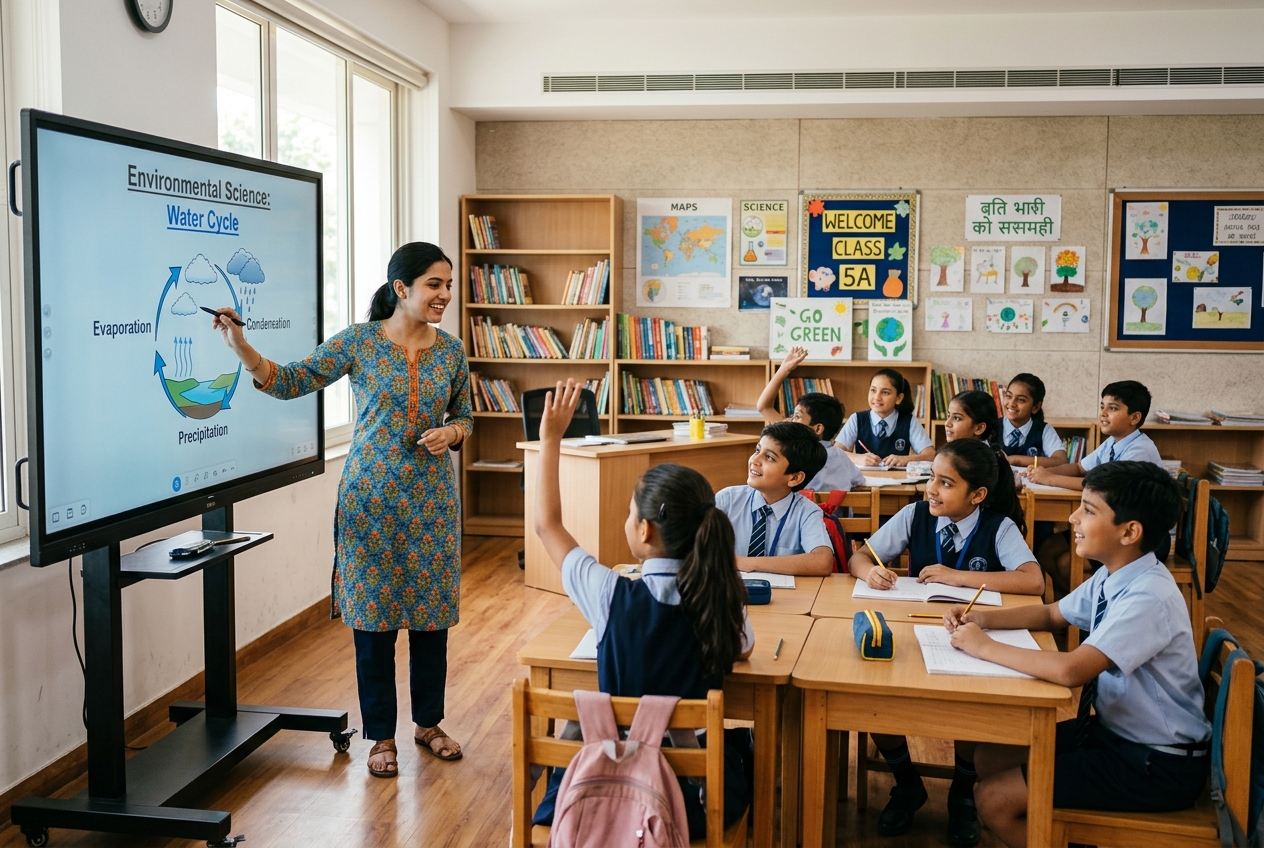
Teachers as Nation Builders: Our Role Beyond the Classroom
Introduction
Teachers are frequently regarded as a society's foundation. Their influence extends far beyond the walls of a classroom. While they are entrusted with imparting knowledge, their responsibility also includes shaping values, nurturing creativity, instilling discipline, and developing future citizens who will carry the nation forward. In this sense, teachers are true nation builders, working silently yet powerfully to mold generations.
This blog looks at how teachers help the country grow, the many different roles they play, and the impact they make in and outside of the classroom..
The Teacher's Role in Shaping Young Minds
Education is at the heart of nation-building. Teachers are the custodians of this mission. Their primary role is to impart knowledge, but more importantly, to inspire curiosity, creativity, and a love for learning.
Fostering critical thinking: Teachers instruct students in the skills of questioning, analyzing, and logical reasoning, which are essential for democratic participation and problem-solving.
Fostering empathy and compassion: By teaching values of kindness, tolerance, and inclusivity, teachers shape emotionally intelligent individuals.
Encouraging innovation: In a rapidly evolving world, teachers stimulate creativity, preparing students to think outside the box and contribute to technological and social advancement.
"The quality of a nation's teachers directly correlates with its progress."
Teachers as Moral Guides
Knowledge without values is incomplete. For their students, teachers serve as moral compass posts, instilling moral behavior that serves as a foundation for society.
Teaching integrity: By modeling honesty, teachers inspire students to act with fairness in personal and professional life.
Promoting social responsibility: Teachers cultivate a sense of duty toward the community and the environment through lessons, stories, and real-life examples.
Fighting prejudice: Teachers play a pivotal role in reducing biases and encouraging unity in diversity.
Teachers Beyond the Classroom
The influence of teachers stretches into society. Their work does not end with the ringing of a school bell.
Community Leadership: Teachers often lead social awareness campaigns, health drives, or cultural initiatives that strengthen community bonds.
Mentorship: Beyond academics, teachers mentor students in career choices, personal challenges, and social issues.
Promoting Lifelong Learning: Teachers advocate for continuing education, encouraging adults and youth alike to keep upgrading their skills.
Teachers as Agents of Social Change
Throughout history, teachers have been at the forefront of reform and transformation.
Freedom Movements: Many revolutionary leaders were inspired by their teachers who instilled patriotism and courage.
Women Empowerment: Female teachers play a vital role in breaking stereotypes and encouraging girls to pursue education.
Sustainability Advocacy: Teachers educate the younger generation about climate change, sustainable practices, and environmental conservation.
Teachers in the Digital Age
The 21st century has transformed the role of teachers. With technology reshaping education, teachers are adapting to new responsibilities.
E-learning facilitators: Teachers now guide students in navigating online resources and learning platforms.
Global connectors: Virtual classrooms allow teachers to expose students to global cultures, promoting cross-cultural understanding.
Digital responsibility mentors: Teachers guide students on ethical use of technology, addressing issues like cyberbullying and misinformation.
The Emotional Role of Teachers
Teaching goes beyond intellectual development. Teachers often act as counselors, motivators, and emotional anchors.
Counseling students in distress: Many students confide in teachers about personal struggles.
Motivating during failures: A teacher's encouragement can transform setbacks into stepping stones.
Creating a safe space: Teachers foster classrooms where students feel respected, heard, and valued.
Teachers as Policy Influencers
While politicians frame policies, teachers influence how they are implemented and how effective they become.
Curriculum development: Teachers provide feedback to improve educational content.
Grassroots perspective: Teachers highlight real challenges faced in classrooms, influencing reforms.
Advocacy for equity: Teachers push for inclusive education, ensuring marginalized communities are not left behind.
Challenges Teachers Face as Nation Builders
Despite their importance, teachers often encounter significant obstacles:
Low recognition: Many societies undervalue teachers compared to other professions.
Resource limitations: Lack of infrastructure hampers their ability to provide quality education.
Workload stress: Teachers balance teaching, administration, and extracurricular responsibilities.
Adaptation to change: Rapid technological and societal changes demand constant upskilling.
The Way Forward
To strengthen the role of teachers as nation builders, several measures are essential:
Professional development: Continuous training ensures teachers remain updated.
Better compensation: Financial recognition encourages more individuals to pursue teaching.
Technology integration: Access to modern tools enhances teaching effectiveness.
Teacher empowerment: Policies must recognize teachers as key stakeholders in decision-making.
Inspirational Stories of Teachers as Nation Builders
Dr. Sarvepalli Radhakrishnan (India): A philosopher and teacher who later became President, symbolizing the respect for educators in nation-building.
Malala Yousafzai's teachers (Pakistan): Who supported her right to education despite threats, inspiring global movements for girls' education.
Ramon Magsaysay Award-winning teachers: Across Asia, several educators have been honored for transforming lives beyond classrooms.
Conclusion
Teachers are more than instructors—they are visionaries, guides, reformers, and nation builders. Their impact extends beyond books and classrooms, influencing society's moral fabric, economic growth, and cultural identity. By nurturing the leaders, innovators, and citizens of tomorrow, teachers lay the foundation of a prosperous and progressive nation. In recognizing and empowering teachers, we invest not only in education but in the very soul of a nation's future
— Farzana Hannure
BrightChamps Tech Pvt. Ltd