AI as a Friend and Foe in Education
AI as a Friend in Education
1. Personalized Learning
One of the greatest promises of AI in education is personalization. Traditional classrooms often follow a “one-size-fits-all” model, where teaching pace and content are designed for the average student. However, every learner has unique strengths, weaknesses, and preferred learning styles. AI-powered systems can analyze student performance data and adjust lessons accordingly.
For example, adaptive learning platforms like DreamBox, Carnegie Learning, and Duolingo modify exercises in real time based on how well a student is performing. A struggling learner may receive simpler tasks and additional explanations, while advanced learners are challenged with more complex problems. This individualized approach ensures that students neither feel left behind nor bored.
2. Accessibility and Inclusivity
AI also acts as an enabler for students with disabilities. Speech-to-text technology allows students with mobility issues to dictate answers instead of writing. Text-to-speech tools help visually impaired learners access materials, while AI-powered translation tools allow non-native speakers to engage in classrooms conducted in different languages. AI applications like Microsoft’s Immersive Reader or Google’s Lookout are already revolutionizing accessibility.
Such tools promote inclusivity, ensuring that learning is no longer restricted by physical, linguistic, or cognitive barriers. This is especially important in diverse classrooms where inclusivity is not just an ethical requirement but a pedagogical necessity.
3. Teacher Support and Efficiency
Educators often face overwhelming workloads—lesson planning, grading, administrative tasks, and student mentoring. AI can relieve much of this burden. Automated grading tools assess objective tests, freeing teachers to focus on creative assignments. AI assistants can schedule classes, track attendance, and provide feedback to students.
Moreover, AI tools can help teachers identify patterns in student performance. For instance, if several students struggle with a particular concept, the teacher can receive insights from AI systems and adjust lessons accordingly. In this sense, AI serves as a support system, not a replacement, empowering teachers to spend more time on personalized guidance and mentorship.
4. Expanding Access to Education Globally
AI-based platforms have expanded educational opportunities to millions worldwide. Online courses powered by AI tutors, chatbots, and virtual classrooms make learning accessible beyond traditional schools. For learners in remote or underserved areas, AI provides access to high-quality content without requiring physical infrastructure.
In developing countries, where teacher shortages are common, AI-powered learning apps offer an alternative. For example, apps like Byju’s in India or Squirrel AI in China use AI-driven methods to reach millions of students who might otherwise lack quality instruction.
5. Lifelong and Skills-Based Learning
In today’s fast-changing job market, lifelong learning is more important than ever. AI enables adults to learn new skills at their own pace, often through microlearning apps, AI tutors, and recommendation engines. Platforms like Coursera or LinkedIn Learning use AI to suggest courses based on a learner’s profile and career goals, making reskilling more targeted and effective.
AI as a Foe in Education
1. Overreliance and Loss of Critical Thinking
While AI offers personalized guidance, there is a risk of students becoming overly dependent on machines. Tools like ChatGPT can instantly generate essays, solve math problems, and answer complex questions. While this is convenient, it may discourage students from developing independent critical thinking and problem-solving skills. Education is not merely about acquiring answers—it is about nurturing curiosity, resilience, and creativity. If students rely too much on AI for instant solutions, the learning process could become superficial.
2. Erosion of Human Interaction
Human relationships are central to education. Teachers do not merely transfer knowledge; they mentor, motivate, and shape character. Classrooms also cultivate social skills, empathy, and teamwork. Excessive use of AI risks reducing education to a transactional exchange of information.
An AI tutor may explain calculus flawlessly, but it cannot replace the encouragement of a teacher who inspires a struggling student to persevere. Similarly, peer learning, debates, and discussions are vital for holistic development—something AI struggles to replicate.
3. Bias and Inequality
AI systems learn from data, and data often carries societal biases. If educational AI is trained on biased datasets, it can reinforce stereotypes or disadvantage certain groups. For example, predictive algorithms that recommend student placements or academic tracks may unintentionally discriminate based on gender, race, or socioeconomic background.
Moreover, AI-driven education requires technological infrastructure—devices, stable internet, and electricity. In underprivileged regions, students without access to these tools risk falling further behind, widening the digital divide instead of bridging it.
4. Privacy and Surveillance
AI systems in education often collect massive amounts of data—student performance, browsing behavior, even emotional responses through facial recognition. While this data can enhance personalization, it raises serious concerns about privacy and surveillance. Who owns this data? How securely is it stored? Could it be exploited by corporations for profit or governments for control? Such questions highlight the risks of entrusting sensitive student information to AI systems.
5. Ethical and Professional Challenges for Teachers
As AI handles more administrative and instructional tasks, some fear it could threaten the role of teachers. While full replacement is unlikely, there may be pressure to reduce teaching staff or rely more heavily on AI tutors. This could undermine the professional autonomy and dignity of educators.
Additionally, ethical dilemmas arise when AI is used to monitor students—tracking eye movements during exams, detecting emotions in classrooms, or flagging “unengaged” students. Such practices may feel intrusive, creating an atmosphere of mistrust rather than learning.
Balancing the Scales: Friend and Foe Together
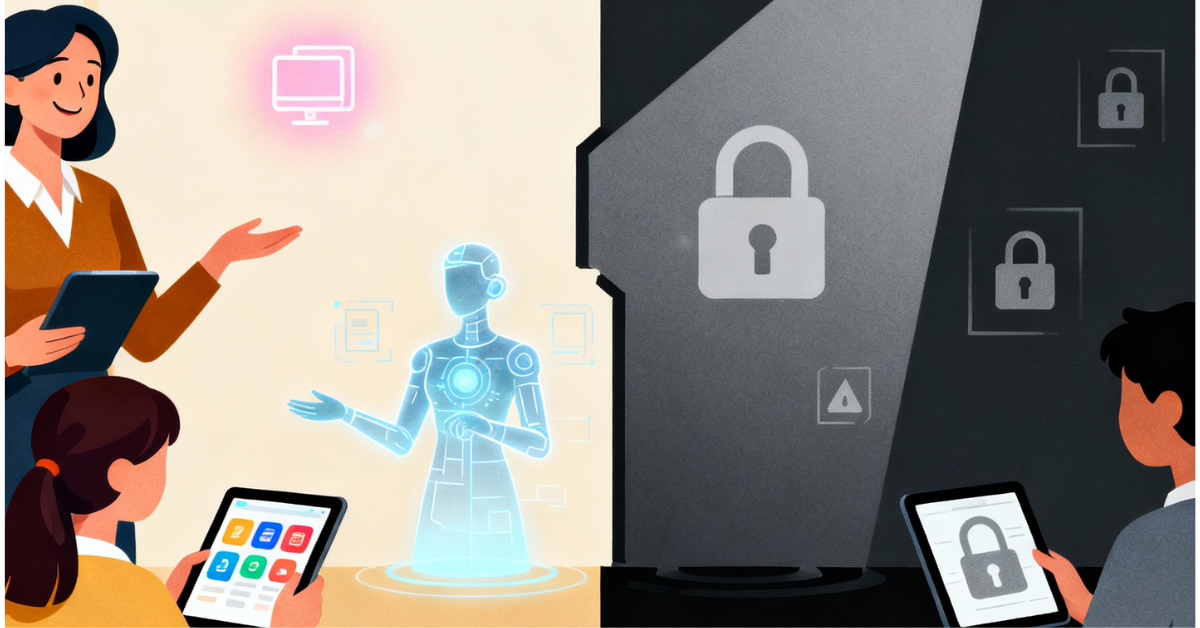
The truth is that AI in education is neither purely friend nor purely foe—it is both, depending on how it is implemented. Like any tool, AI reflects the intentions and ethics of its users.
If designed with inclusivity, transparency, and student well-being in mind, AI can amplify human potential and democratize education.
If misused for profit, surveillance, or cost-cutting, AI risks dehumanizing education and widening inequalities.
The challenge lies in governance, regulation, and responsible innovation. Policymakers must ensure ethical data use, address the digital divide, and preserve the central role of human teachers. Educators must embrace AI as an assistant, not a competitor. Students must learn to use AI responsibly—as a tool for growth, not a shortcut.
Case Studies
1. AI in Higher Education: Georgia Tech’s AI Teaching Assistant
In 2016, Georgia Institute of Technology introduced “Jill Watson,” an AI teaching assistant built on IBM’s Watson platform. Students interacting with the assistant in online forums did not realize for months that they were conversing with AI. Jill Watson handled routine questions, freeing professors to focus on deeper discussions. This case demonstrates how AI can enhance teacher-student interaction rather than replace it.
2. AI in Schools: China’s Classroom Monitoring Systems
In contrast, some schools in China introduced AI cameras to monitor students’ facial expressions and engagement during lessons. While intended to improve learning outcomes, the initiative sparked global criticism for invading privacy and reducing students to data points. This case illustrates AI as a potential foe when misapplied without ethical safeguards.
The Future of AI in Education
Looking forward, the integration of AI in education is inevitable. The question is not whether AI should be used, but how. Emerging innovations suggest exciting possibilities:
Intelligent tutoring systems offering round-the-clock academic support.
Virtual reality (VR) and AI merging to create immersive, experiential learning.
Emotionally intelligent AI detecting stress and offering personalized motivation.
At the same time, new ethical frameworks must guide adoption. Global cooperation will be necessary to ensure AI tools are equitable, unbiased, and respectful of privacy. Importantly, the role of teachers must be reimagined—not diminished, but elevated—as mentors, facilitators, and moral guides in an AI-driven world.
Conclusion
AI in education embodies both hope and risk. As a friend, it offers personalization, inclusivity, efficiency, and global access to learning. As a foe, it risks eroding human interaction, promoting overreliance, reinforcing inequalities, and compromising privacy.
Ultimately, AI is a tool—its impact depends on the values, ethics, and vision of those who wield it. The challenge is not to reject or embrace AI blindly, but to shape its role thoughtfully. Education must remain a deeply human endeavor, enriched—but never replaced—by machines.
If implemented wisely, AI can be one of the greatest allies of education, enabling a future where learning is more accessible, engaging, and meaningful than ever before. If misused, it could undermine the very essence of what education stands for. The choice, therefore, is ours.
Arshit Sharda
Bright future higher secondary school
Weekly newsletter
Get the latest blog updates, practical hiring insights, and featured reads delivered straight to your inbox.
Read about our Privacy Policy.